Snap-In Dentures vs. All-on-X: Two Different Ways to Replace a Full Arch of Teeth
Patients who are missing most or all of their teeth are often deciding between a removable implant-supported denture—commonly called a snap-in denture—and a fixed full-arch restoration such as All-on-X. Both use dental implants for support, but they differ substantially in how they feel, how they are cleaned, how they are repaired and how treatment is planned.
Neither option is automatically “better.” The better choice depends on anatomy, bone, restorative space, hygiene ability, expectations, finances and how strongly the patient values a fixed versus removable restoration.
What Is a Snap-In Denture?
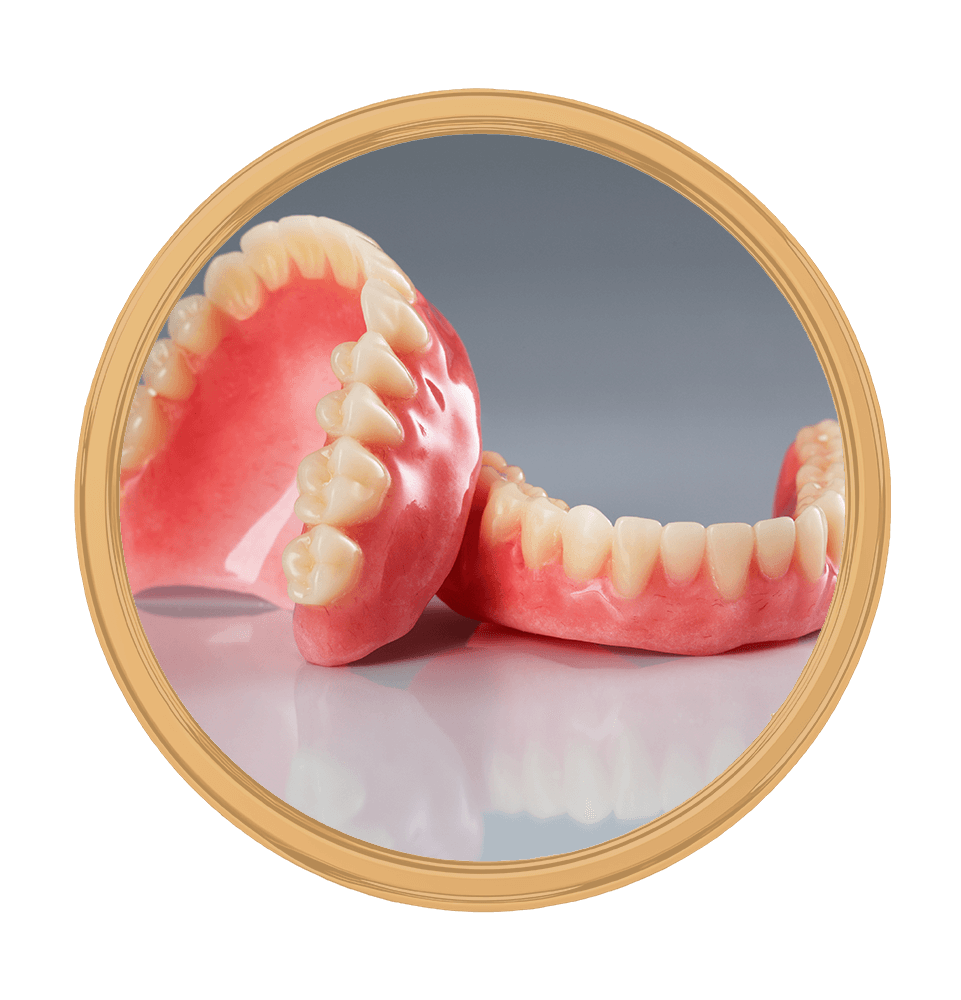
A snap-in denture is a removable denture that attaches to dental implants. The implants help stabilize the denture and reduce the movement that can occur with a conventional removable denture.
The patient removes the prosthesis for cleaning. Depending on the design, attachments in the denture engage implant components in the mouth to provide retention.
What Is All-on-X?
All-on-X is a fixed full-arch implant concept. A full set of prosthetic teeth is secured to multiple dental implants and is not removed by the patient for routine daily cleaning. The number and distribution of implants are selected according to the clinical situation rather than assuming one implant count fits every patient.
Learn more about the difference between All-on-4 and All-on-X.
The Biggest Difference: Removable vs. Fixed
For many patients, this is the defining difference.
- Snap-in denture: removable by the patient.
- All-on-X: fixed to the implants and typically removed only by the dental team when indicated.
Some patients strongly prefer the psychological and functional feeling of fixed teeth. Others value the ability to remove the prosthesis and clean it directly.
How Do They Feel When Eating?
Both options can improve stability compared with a conventional denture. A fixed full-arch prosthesis generally feels more integrated because it does not move in and out of the mouth during use. A well-designed implant overdenture can still provide substantial retention and chewing confidence while remaining removable.
The patient’s bite, muscle function, opposing teeth and prosthetic design all influence the final experience.
Which Is Easier to Clean?
A snap-in denture can be removed, allowing the patient to clean the prosthesis and the implant attachments directly. This can be an important advantage for patients who value simple access for hygiene.
A fixed All-on-X restoration requires cleaning around and underneath the prosthesis while it remains in place. Patients may use floss-threading techniques, interdental brushes, water irrigation and other tools recommended for their individual prosthesis.
Neither treatment eliminates the need for professional maintenance.
What About Bone and Anatomy?
Both treatments require sufficient implant support, but the ideal implant positions and restorative space differ by prosthetic design. Three-dimensional imaging can help evaluate available bone, important anatomy and possible implant trajectories before treatment.
Read more about CBCT imaging for dental implant planning.
Does All-on-X Always Require More Surgery?
Not necessarily. Surgical complexity depends on the patient, not simply the name of the treatment. Extractions, bone reduction, grafting, implant placement and soft-tissue management may or may not be needed depending on the existing condition and restorative plan.
Similarly, an implant overdenture can range from relatively straightforward to complex depending on anatomy, implant position and the prosthesis being replaced.
Which Option Gives Better Lip and Facial Support?
This is highly patient-specific. A removable denture can replace both teeth and a larger amount of lost gum and ridge volume, which can sometimes provide useful lip and facial support. A fixed full-arch prosthesis has different restorative-space requirements and must be designed carefully to balance tooth position, tissue replacement, cleansability and smile esthetics.
This is one reason a treatment plan should not be chosen from photographs or price alone.
How Does Maintenance Differ?
Both treatments require ongoing care, but the maintenance is different.
Snap-in dentures may require replacement of retentive inserts or attachment components as they wear. The denture itself can also need relining, repair or replacement over time.
All-on-X restorations may require evaluation of screws, restorative materials, the prosthesis, implant tissues and the bite. Depending on the prosthetic material and design, repairs or prosthesis replacement may eventually be needed.
Which Option Costs More?
A fixed full-arch restoration generally involves more complex surgical and restorative planning than a removable implant overdenture, but actual cost depends on the treatment design, number of implants, extractions, grafting, provisional restorations, final prosthetic materials and other case-specific factors.
For current treatment options, visit our dental implant cost and financing page.
What if I Already Have Dentures?
Existing denture wearers may be candidates for either an implant-supported removable prosthesis or a fixed full-arch solution. The evaluation should consider the current denture, ridge anatomy, bone volume, smile, bite, restorative space and what the patient dislikes about the existing situation.
If the primary complaint is denture movement, a removable implant-supported option may address that problem effectively. If the patient strongly wants teeth that remain fixed in place, All-on-X may better match that goal when anatomy and other factors permit.
Who Might Prefer a Snap-In Denture?
A removable implant overdenture may appeal to a patient who:
- wants substantially improved denture retention while keeping the prosthesis removable;
- values easy direct access for daily cleaning;
- needs restorative support for lost ridge or facial volume;
- wants an implant-supported option with different financial considerations than a fixed full-arch restoration.
Who Might Prefer All-on-X?
A fixed full-arch restoration may appeal to a patient who:
- strongly prefers teeth that remain fixed in the mouth;
- wants to avoid removing a denture each day;
- has anatomy and restorative space compatible with the planned fixed design;
- understands the hygiene and maintenance requirements of a fixed prosthesis.
How We Compare the Two Options
At ABC Dental Care in Las Vegas, John Walker, DDS evaluates the surgical and restorative requirements together. The goal is not to push every patient toward the same prosthesis, but to determine which design best fits the patient’s anatomy, function, hygiene, expectations and long-term maintenance needs.
You can explore our full and partial denture options, dental implant treatment and All-on-X full-mouth implant treatment.
For visual examples and patient perspectives, see our before-and-after treatment examples and implant patient stories.
Bottom Line
Snap-in dentures and All-on-X solve different problems. A snap-in denture offers implant retention while remaining removable. All-on-X provides a fixed full-arch restoration. The right choice comes from matching the prosthetic design to the patient—not from assuming the most expensive or most fixed option is automatically the best one.