
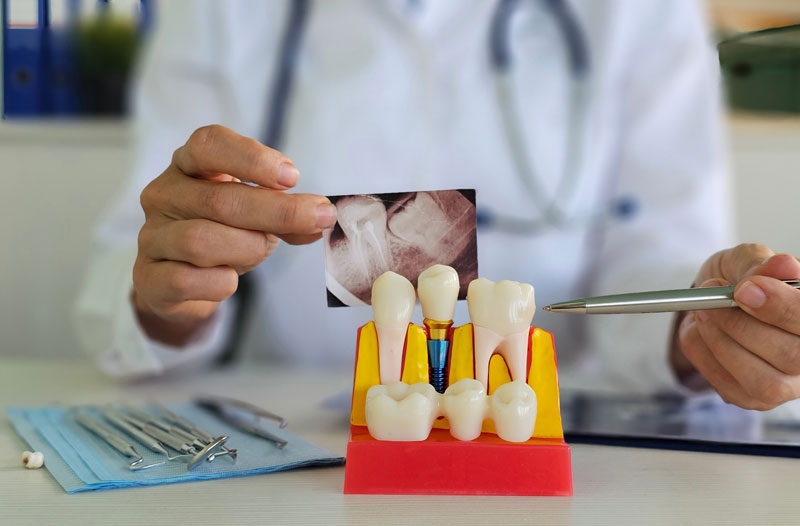
When a dental implant develops a problem, the first question is not automatically, ‘How do we replace the implant?’ The first step is determining what has actually failed. An implant restoration has several components, and a loose crown, fractured screw, damaged abutment, inflammation around the implant, progressive bone loss, and a truly mobile implant are very different problems.
At ABC Dental Care in Las Vegas, Dr. John Walker evaluates the implant, surrounding bone and soft tissue, bite, restorative components, and the patient’s overall history before recommending treatment. In some situations the implant itself can remain in place and only the restorative component needs repair or replacement. In others, removal of the implant and reconstruction of the site may be necessary.
Does a loose implant crown mean the implant failed?
No. A crown or bridge supported by an implant can become loose even when the implant in the bone remains integrated. A loose prosthetic screw, cement failure, fractured component, or damage to the restoration can sometimes be corrected without removing the implant. Our guide to dental implant abutments and restorative components explains how these parts work together.
A mobile implant is different. If the implant fixture itself moves within the bone, that requires prompt evaluation. Clinical examination and appropriate imaging help distinguish a restorative problem from loss of implant integration or significant peri-implant bone loss.
Why can dental implants fail?
Implant complications can occur early during healing or later after years of function. Contributing factors can include inadequate integration, infection, progressive peri-implant inflammation and bone loss, unfavorable bite forces, clenching or grinding, smoking or nicotine exposure, medical factors that affect healing, poor cleansability, or restorative and mechanical complications. Our overview of dental implant risks and warning signs discusses these factors in more detail.
Sometimes the implant was placed appropriately but conditions changed over time. In other cases, implant position, restorative design, available bone, or force distribution can make long-term maintenance more difficult. The cause matters because replacing an implant without addressing the reason for the original problem can reproduce the same complication.
What happens if an implant has to be removed?
If removal is indicated, the condition of the site determines the next step. Some sites have adequate remaining bone for reconstruction and future implant placement. Others may require bone grafting and a healing period before another implant is considered. Infection, the size and location of the bone defect, soft-tissue condition, nearby anatomy, and the prosthetic plan all influence timing.
Immediate replacement at the same appointment is possible in selected situations, but it is not appropriate for every failed implant. Predictability is more important than forcing treatment into a particular timeline.
Planning the replacement implant
3D CBCT imaging for implant planning may be used to evaluate the remaining bone and nearby anatomy and to determine whether the proposed implant position can support the intended crown, bridge, overdenture, or full-arch prosthesis. Replacement should be prosthetically driven.
For Dr. Walker, the objective is not simply to get another implant into the site. Implant position, restorative space, emergence profile, screw-access position, bite forces, hygiene access, and the condition of adjacent implants or teeth all need to be considered before surgery.
Can bone grafting be necessary after implant failure?
Yes. Bone loss can occur around a failing implant, and removing an implant can leave a defect that needs reconstruction. The type and extent of grafting depend on the anatomy and the future restorative plan. Some defects can be managed at implant removal, while others are better treated in stages.
When should an existing implant be evaluated?
Schedule an evaluation if you notice mobility, persistent or increasing discomfort, swelling, drainage, recurrent bleeding, a bad taste associated with the implant, gum recession, difficulty chewing, food trapping that has become difficult to manage, or a change in the way the restoration feels when you bite.
If your concern began shortly after surgery, our dental implant aftercare and healing guide explains expected healing and warning signs that deserve a call to the treating office.
Dr. Walker’s implant training includes fellowship training through the California Implant Institute, an implant fellowship through NYU, full-arch implant training, and advanced overdenture training. His clinical work includes individual implants, implant-supported dentures, full-mouth and full-arch implant treatment, and evaluation of implant complications.
If you are concerned about an existing implant or are considering dental implant treatment in Las Vegas, ABC Dental Care can evaluate whether the problem involves the restoration, the implant itself, or the surrounding tissue and discuss the appropriate treatment options. Call 702-228-1701 to schedule an implant evaluation in Las Vegas.